Powered by Blogger.
Guitar Classic
Classic Guitar
Guitar Bass
Showing posts with label Your Guitars. Show all posts

Tuesday, February 22, 2011

Jim Davies' electrified 5-string acoustic

Jim Davies, bassist with Small Machine writes:
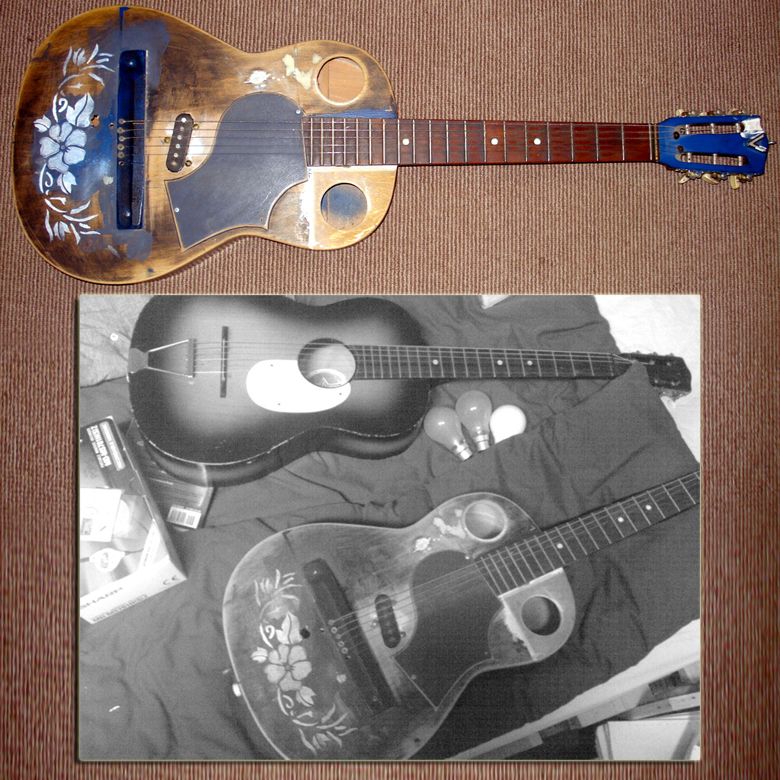
I sometimes comment on the Guitar Blog and I thought I'd send in this - your comment on the Burns/Hayman guitar, "I've always liked acoustics that have obviously been electrified with pickups and control knobs on show for all to see" spurred me into photographing and videoing one of my own guitars for submission for your blog.

The attached photos are of an old acoustic that has been "modified" over the years by me, The original guitar was sunburst, made in Eastern Europe model with a white scratchplate, trapeze type tailpiece and no bridge (or strings). Over the years different paint finishes and hardware have been added to the guitar, including a pickup from a Japanese Telecaster copy (wired straight to a jack) and homemade bridge, scratchplate and soundholes. I keep it in an open-E tuning based on the "Keith Richards" open G, so it only needs 5 strings. The strings come out of the big bridge straight onto the wood - there is no saddle - which lends the guitar a sitar-type quality.

I made a YouTube video so that you can hear what it sounds like amplified and acoustically too.
I used to think that perhaps I had gone too far with the things I had done to the guitar, but a few years ago I found an unmodified version of the same guitar in a charity shop. I bought it, got it home, put new machine heads on and strung it with new strings and realised why I had gone to such lengths to change the original; it sounded awful! Attached also is a cameraphone photo of the two together [inset, above].

Regards
Jim Davies
Hey Jim, great stuff. Thanks for sharing it with us. I guess this is the same kind of do it yourself ethos as displayed by cigar box guitar builders. I'm reminded also of Seasick Steve, who besides playing his "3-string trance wonder" also often riffs upon a beaten-up old parlour guitar with a Teisco pickup screwed into the top - and it sounds fantastic.

Oh, and on an unrelated note, I'd just like to point out that yesterday we exceeded one million page hits - which is nice. Remember, there were no other guitar blogs when I started this one. I'm just pleased that so many people seem to like it, bearing in mind that I originally started it only so as to keep track with guitar-related items I'd found when surfing the web.

G L Wilson

Guitarz - The Original Guitar Blog - now in its 10th year!

Monday, February 7, 2011

Keith's homemade guitar

guitarz.blogspot.com:
Keith writes:
I read your blog every time you have a new post and enjoy it very much. I don't know if you are interested in this or not but I've built an electric guitar for myself. I posted the whole process on my blog.
Thanks for that, Keith. That's a highly individual-looking guitar you have there! I like the contouring to the top - it's like an extreme German carve. It's so nice to see a guitar that someone's created that isn't a "cookie cutter" guitar using the same old templates that we see time and time again, or else looks as if it's been made by someone who has never even seen an electric guitar before and just had someone not very knowledgeable describe one to them.

Great to see the whole build process too!

G L Wilson

Guitarz - The Original Guitar Blog - now in its 10th year!

Thursday, January 20, 2011

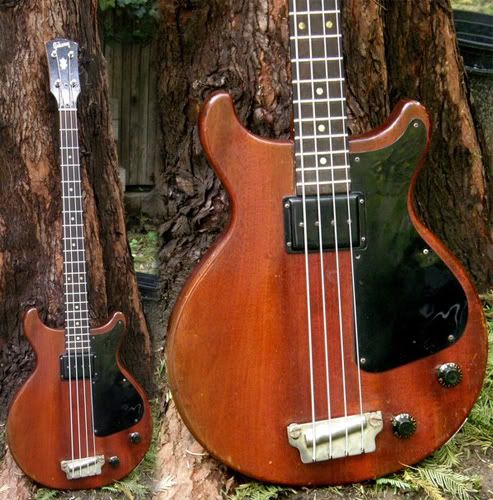
Memories of a 1959 Gibson EB0 Bass

1959 Gibson EB0 Bassguitarz.blogspot.com:

Gary writes:
I just discovered your blog site about this Gibson bass tonight. My first bass I ever bought, Jan 1967, 44 years ago yesterday as I write this, was a 1959 EBO. I had no idea of the history of the EBO, I just bought it because it was $75 and the bass player of the Nomads, the hot band at my high school in Kansas City, Mo. had traded it in on an EB-2, I was just starting to play bass, and it was available. Had I had any idea of the history of the EBO I would still own it. Naturally, not knowing I traded it in for an EB-2 in 1972.

I loved that old EBO in spite of the fact that playing it was like driving a big truck without power steering. It was the only bass I'd ever really played at that time so I didn't know any better. I did fine with it but other players had a hell of a time with it. At a battle of the bands one night in 1971 the band that was up after us broke a string on his bass. True to the times he didn't carry spare strings so he asked to borrow my bass. In the end, our band won...his didn't. He was really angry with me because he said my bass was so hard to play he couldn't play well & that cost them the battle. Like I said I was used to it so it played fine for me.

I don't really know how it sounded. There weren't the bass amps availavble then that are around now. I had a 23 watt Silvertone head with a home made cabinet with 2-15" cheap speakers...who knew about good speakers. I would love to hear it thru my SWR SM-400 & Goliath cabinet I have today. Oh well.

I wish I hadn't gotten rid of it, it would have been a real collectors item. I have only ever seen one other one & that was back in the early 70's. Seeing the pictures on your blog brought on the pang in the heart that seeing an old girlfriend years later would bring.

Thanks for the blog page on it. It brought back a lot of memories I'm surprised I can still muster up.

Gary Snow
Hey Gary, thanks for writing to us with your reminiscences. As much as we love our guitars and basses here at Guitarz, a lot of what we write is gleaned via the internet rather than from personal experience. Unfortunately, it's not possible to try everything out! It's good to hear how some of these vintage instruments handled back in the day from someone who actually played them.

G L Wilson

Guitarz - The Original Guitar Blog - now in its 10th year!
Wednesday, January 19, 2011

Another one from the "Be Careful not to Impale Yourself" school: B.C. Rich Ironbird

guitarz.blogspot.com:
Tyler writes:
I recently acquired another pointy 80s Japanese Monster. (Sounds a bit like something from Godzilla, eh?)

This is a model you've not yet covered: A 1983 B.C. Rich Ironbird, made in Japan in '83-'84. This isn't apparently the most popular shape (though used by the likes of Tony Iommi and Paul Stanley), but sure beats that ugly Widow! Mine's not really in the best shape (not by my hands), but plays great and sounds fantastic as well. I know B.C. Rich isn't known for necessarily ergonomic designs, and although this doesn't look it, it is very comfortable. Played in the classical seated position (which is the only way I do), it rests comfortably on your leg, being cut-out in a manner that it balances in the perfect position. Standing, it's a bit neck heavy but the long lower horn acts as a rather decent balance/armrest.

I was drawn to this by its Kahler trem (far superior to the Floyd Rose, in my opinion), which has proved a great asset to both my playing and alternate tuning purposes. The pickups are probably the stock B.C. Rich units, they are unmarked. I'll admit the pickups also attracted me on looks alone. I can't resist rails or hex-screw pole pieces. It joins my Electra Futura in the "outragoeus pointy guitar with a metallic finish" group of instruments.

I've got not much else to say, it's a great guitar and it comes in a simple yet attractive package.

~Tyler
Keep those stories and photos of your guitars coming in, folks! And as Bertram has already commented, lets see some more photos of you guys playing your guitars.

G L Wilson

Guitarz - The Original Guitar Blog - now in its 10th year!

Thursday, January 13, 2011

Epiphone Riviera P93 - with THREE P90s

guitarz.blogspot.com:
Rob J writes:
Dear Guitarz Blog,

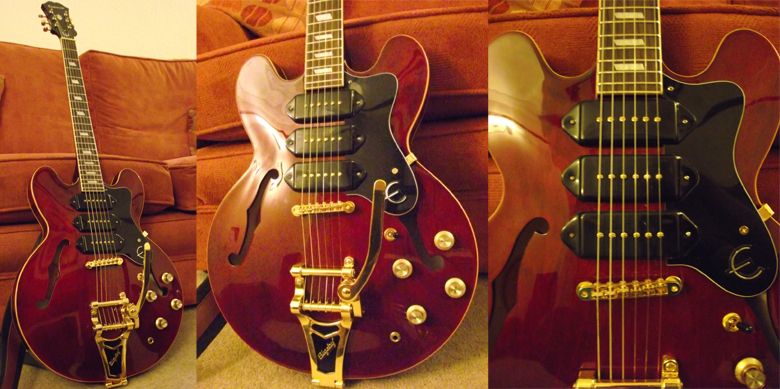
On Tuesday you posted about a hollowbody guitar with 3 p90 pickups and asked 'did you ever see a hollow body guitar with 3 p90s?', well there is one sitting in my front room!

I bought this guitar a year ago from a local guitar shop for £300. Google has revealed to me that it is an Epiphone Riviera P93, a thinline semi-hollowbody guitar with 3 p90 pickups, a threeway selector, 3 volume pots, a master tone pot and a bigsby tailpiece with a tune-o-matic bridge. The selector switch selects the neck and middle pickup in the top position, all three pickups in the middle position and the middle and bridge pickup in the bottom position. It was released sometime around 2007-8 so it is definitely a modern guitar!

just thought you might be interested in this guitar after Tuesday's post.

Keep up the good work,
your loyal reader,
Rob J
Oh dear, it looks like I'm going to have to watch Bertram coming out with wild things such as "did you ever see a hollow body guitar with 3 P90s?"

I just KNEW someone was going to challenge that - it was an open invitation! And as was already pointed out in the comments, there's also the Gibson ES-5, as played by T Bone Walker.

Thanks for showing us your guitar, Rob. It's a beauty!

G L Wilson

Guitarz - The Original Guitar Blog - now in its 10th year!
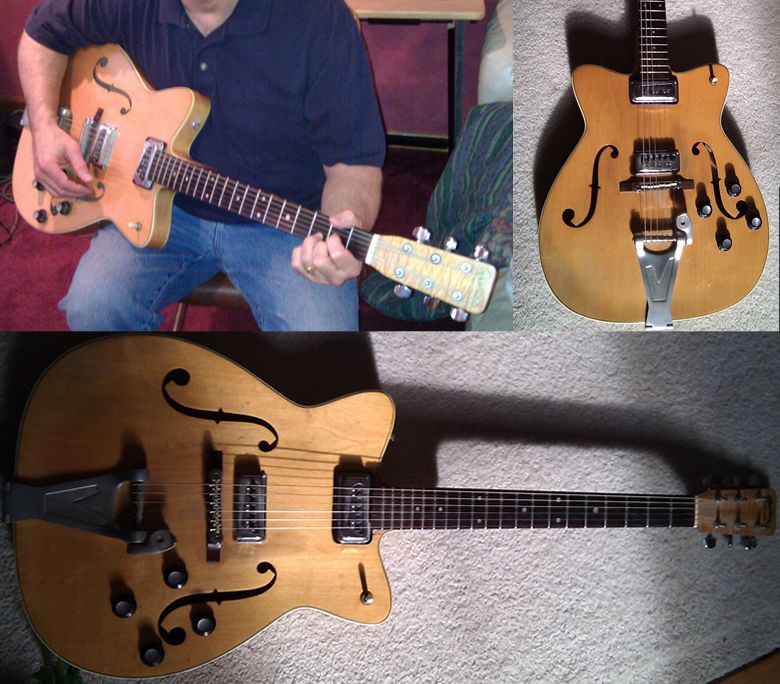
Dad's guitar: Martin F-65 semi

guitarz.blogspot.com:
Greg writes:
Hi there,

I've been following your blog for a little under a year now and I really love it. Thank you for sharing so many treasures and for providing such great commentary.

I thought you might be interested in a guitar that I came across in my dad's possession over my holiday vacation back home (somehow I didn't realize my dad owned this gem). While it's by no means completely wild, it sure is unusual. It's an electric guitar that Martin made back in the '60s. Kind of unusual considering Martin is known exclusively for their high quality acoustics.

As I understand it, there were only something like 1,800 of them ever made. The model is a F-65. Sadly, I don't know the exact date it was built, but they were only created from 1962 to 1965. Talking with some fellow guitar enthusiasts at a local vintage guitar meetup, they explained that it was a case of Martin just not being able to sell the model due to their strong association with acoustics and not electrics. It's an incredible guitar workmanship-wise. This particular guitar was professional sanded down to a nice, natural wood, which I absolutely love. The pickguard was removed too, giving it something of a John Lennon Casino look. All models I've seen online and read about have a sunburst finish otherwise. The place where the tremolo bar would lock in has been blocked with a wooden dowel though. My dad picked this up back in 1980 from a vintage guitar shop in Kansas City and all of the cosmetics were as they are now. He's had some work done to it and I hope you'll forgive the overused expression, but it's an absolute dream to play. Sounds great too! I hope in his older age, he finds it in his heart to fork it over to me, hah!

Anyway, I thought you might be interested in this oddity. I'm sadly back in Seattle now so I can't really provide too many more details on the guitar without probing my dad for information. Hope you're having a great New Year! Take care.

Greg
Hey, thanks for sharing, Greg. We have looked at a couple of Martin's electric models previously, but it's good to hear from someone who has personal experience of one.

Keep 'em coming, folks!

G L Wilson

Guitarz - The Original Guitar Blog - now in its 10th year!
Wednesday, January 12, 2011

Mitre Python ... info wanted

guitarz.blogspot.com:
Here's an email about the above guitar:
Well, I bought this guitar in late 85, early 86 called the Mitre "Python". I remember a bass next to it called the "Mongoose". Both had active electronics. Mine were extremely funtional, coil splits, taps, etc. but it also had a built in overdrive that sounded pretty good. The only thing I didn't about the guitar was the paintjob. Low quality polish job, you could even slightly see a glue seam if you held it at the right angle to the light. I painted the guitar not long after owning it, and since I had it stripped, I did come relief carving on the upper back and front to make it more comfortable for my forearm. It was basically a slab. And I took out the electronics board, unsoldering everything without writing myself a schematic, so it went back together a passive guitar. I'd love to get a schematic, or someone who knows what he's doing to rewire it original. Other than that, it has Schaller pickups, and machine heads, Kahler tremelo, brass nut. I just finished repainting it for the third time, and here are the pics. notice 008 on neck, and body blank? I'm not sure if that means 8th guitar, or 8th python... I can't find out anything about them. I'd appreciate you keeping in touch and keeping me informed about anything you find out.

Thank you,
Vedo
Over to you, guys. Any more info would be greatly appreciated.

G L Wilson

Guitarz - The Original Guitar Blog - now in its 10th year!

Sunday, January 9, 2011

A Les Paul Oddity - Epiphone LP with HSH pickup arrangement

guitarz.blogspot.com:
Stephen writes:
Hi, I've been following your blog for a year and bit now, it's brilliant. It led me to wonder about one of my own guitars - I've had it about two years now, and never really wondered about it, but the more I try and find out about it, the less I seem to know. It started off as (according to The Gutar Dater Project website) a Korean made 1996 Epiphone Les Paul Limited Edition, nice sort of bluey green marine burst that is semi transparent so you can see the wood texture (nice gentle quilted look).

The guy who had it before me upgraded a lot of stuff, ie Speigel locking tuners, chrome telecaster style knobs, chrome pick up switch, a couple of punchy new coil tapped humbuckers (JBs I think) and generally upgraded stuff to make it better sounding, rugged, and all with a chrome theme. I was looking for a beefy guitar that hopefully wouldn't develop problems, so I figured if it had been throughly up graded it would do the trick.

Nothing too unusal there, but here's the thing, and I don't know why I've never really wondered about it before - sitting between the humbuckers is a single coil pick up, and it's sunk about half an inch into the body so as to be in keeping with the levels of the humbuckers. It looks like the sort of chrome lipstick pick up you'd get on the neck position of a telecaster. I wondered if someone might have routed out a slot for it and installed it as a guitar project, but when you look on the inside of the hole that the single coil sits in, it's perfectly machine cut and the same bluey green colour is on the inside walls of the hole. If it was a project, surely routing a slot for a pick up would expose the wood of the body of the guitar and there would be none of the blue stain?

The guitar was due a restringing, so while I had the old strings off this evening, I popped the single coil out, and the blue colour of the wood stain definitely goes all the way to the bottom of the slot. I popped out the bridge humbucker too just to compare the slots and any colouration in that one, and they're both bluey green all the way down, including the bottom.

The colouring in the hole suggests to me that the slot for the single coil may have been cut before the guitar was stained the greeny blue colour, which suggests it may have been done at the factory where it was made. The guy I bought the guitar off said it was like that when he got it, and he'd had it while.

Do you know of Epiphone ever releasing a Les Paul with a tele style single coil sitting between the humbuckers? Have you come across anything similar in your blogging? By the way, the single coil sounds very nice, it has a dynamic, articulate chime that the humbuckers can't achieve.
Thanks for showing us your guitar, Stephen. No, it's not a pickup arrangement I've seen on a Les Paul before. Perhaps some of our readers might know some more about it. I have to agree with the conclusion that you yourself have to come to, that the middle-pickup routing was done at the factory.

Now, I've read comments on guitar forums and in emails and a lot of people out there seem to think that we here at Guitarz have set ourself up as self-proclaimed experts. We're not, and have never claimed to be. We - like many of you - are simply guitar enthusiasts and are learning things about our favourite instrument all the time. We're happy to do our best to answer any questions and if we don't know the answers we can try to find out or else ask our readership to assist.

One thing that I've often wondered about is, on a 3-pickup Les Paul, which of the controls control which pickups and is the pickup selector switch a 5-way or is it a regular 3-way with the middle pickup being dialed in separately elsewhere? I took this opportunity to ask Stephen about the controls on his LP, to which he replied:
I'm not 100 percent sure that it all does work, but here's what it does what at the moment - the switch is a standard three way - of the two volume knobs, the volume knob nearest the bridge currently acts as master volume, and the tone control near the bridge currently acts as a master tone - the two tone knobs are push / pull coil tap type jobs for the humbuckers and both work - the volume knob furthest from the bridge doesn't do anything (although it looks like it's wired up) - all the pickups work, I had a look and they're all wired in, but I don't know enough about that side of things to be able to follow what they do.

The bridge humbucker sounds like a bridge humbucker, the neck humbucker sounds like a neck humbucker, and they can both be tapped for a single coilish sound. the centre position engages all three pickups, but the single coil seems to push to the front, with a nice sort of snappiness and articulation that the humbuckers can't manage, tapped or full.

If I was better with electronics I might be able to deduce more, but one thing I do know is that it sounds great, and I can get a ton of sounds out of it.
Thanks again, Stephen!

G L Wilson

Guitarz - The Original Guitar Blog - now in its 10th year!

Wednesday, January 5, 2011

Warmoth Split Jazzmaster

guitarz.blogspot.com:
Here's the second of Dillon's guitars:
The blue guitar here is a custom job, built by the good folks at Warmoth. It's their original split Jazzmaster design, named obviously for the 'split' pickguard. I've been a fan of the Fender body styles every since I started playing, but I felt like I needed something a little more radical; I already had a Strat and a Tele, so the logical progression was obviously the Jazzmaster shape. I put it together about a year ago now, and it's my pride and joy. It's got an HSH pickup configuration with a single-coil-sized humbucker in the middle, though I'm planning on swapping it out for a true single coil as soon as I get the chance. The neck is birdseye maple with a compound neck radius, which is amazingly comfortable and pretty nice to look at too.
It's an interesting variation on a classic design, and a fantastic looking guitar. Thanks for showing us!

I'd just like to ask, is the upper pickguard purely cosmetic, or is there routing in the body beneath for switches (should you want them)?

G L Wilson

Guitarz - The Original Guitar Blog - now in its 10th year!

Tuesday, January 4, 2011

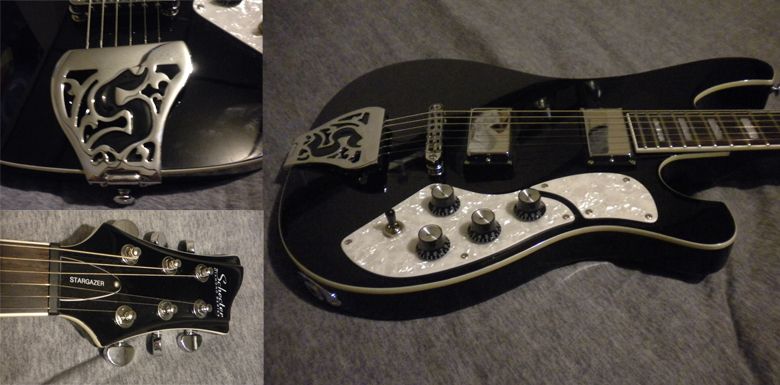
2009 Schecter Stargazer

guitarz.blogspot.com:
Guitarz reader Dillon has emailed to tell us about a couple of his guitars. Here is the first one:
The black one here is a Schecter Stargazer built in '09, which is from an American brand you've never featured on the blog. I picked up this guitar for cheap and it was well worth it. The thing that attracted me was the obvious Rickenbacker-inspired styling (especially that tailpiece, I'm surprised Schecter hasn't been sued for this one) and the variety of tones; both humbuckers can be split with push-pull tone knobs to make a lot of different of tones. The thing's really a workhorse to the core, it can cover a lot of styles of music with ease. I've never been a fan of completely black guitars but this guitar really caught my eye and I still love it. If anyone reading this gets a chance to play one of these, take it for a spin. These are a lot less popular than I feel they should be, it's a really solid guitar for the price and surprisingly comfortable.
It looks like a fine guitar indeed, and something that is a little bit different. I can see the Rickenbacker vibe. And have we really not looked at Schecter guitars before?

More tomorrow...

G L Wilson

Guitarz - The Original Guitar Blog - now in its 10th year!
Sunday, January 2, 2011

Mike Oldfield's Red Fender Stratocaster

guitarz.blogspot.com:
Gef has emailed to tell about his Fender Strat, a guitar with a history having had a famous owner:
This guitar is a Fender Stratocaster from 1963 and was one of Mike Oldfield’s favourite guitars. He bought it in 1984 and sold it in December 2007. He used it on 15 albums during this era, the most famous one being "Tubular Bells II" and he used this guitar during the great World Premiere of this album in Edinburgh in 1992.

He used it for the very last time in Antwerp during the rehearsals of The Night of the Proms in 2006. Unfortunately, he didn’t play it during the concerts in Germany. It was the last time we saw Mike Oldfield with this wonderful guitar.

Mike has often said that this guitar “was his favourite one” alongside another, his current PRS 24.
Thanks for that! It's good to know that this guitar is still being cherished.

If any other readers have a guitar with a story to tell, please do get in touch!

G L Wilson

Guitarz - The Original Guitar Blog - now in its 10th year!

Saturday, December 4, 2010

Mathias Lerche's aluminium and walnut bodied guitars

guitarz.blogspot.com:
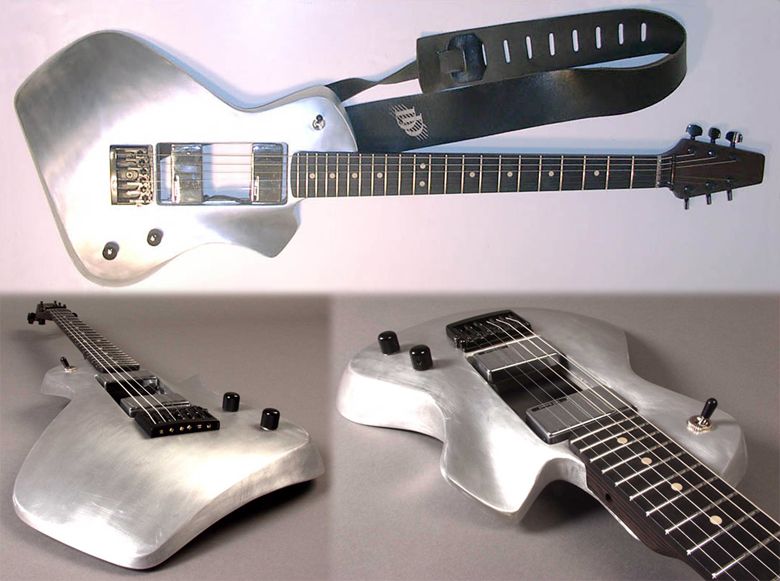
Mathias Lerche, an industrial designer from Denmark, has emailed with photos of guitars he has created. He says:
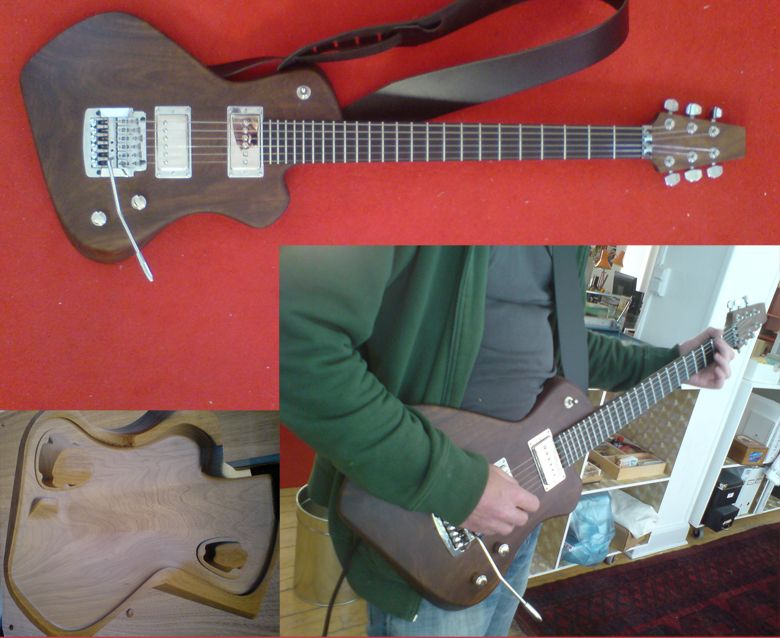
"I have been working on a guitar concept for some years now and I'm currently building third generation of my design. This is the first two prototypes. I plan to produce these in the near future as a side business to my industrial designing. Starting slow and safe...

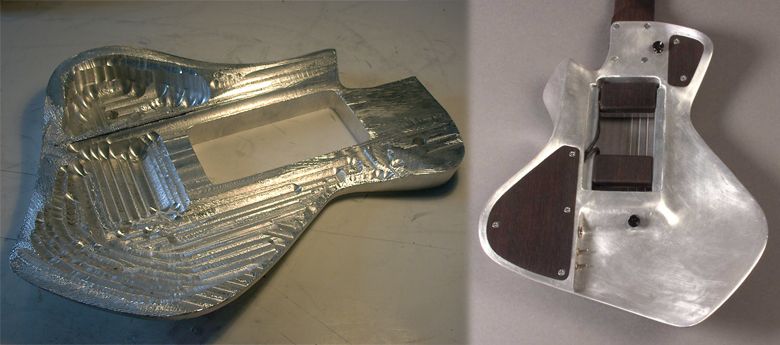
"The first prototype was made while studying at the Danish Design school, drawing layout and sculpting foam for months to get the a working shape. It was carved from a 22kg piece of aluminum(my cheapest option at the time) down to about 2,3kg. A terrible waste, but the idea was that the production model should be moulded and a bit more exiting than the usual routed flat alu guitars seen. It has a warmoth wenge/ebony neck, two slide-able Lace humbuckers, and two series/parallel switches at the back."

"The second is a one piece walnut body, CNC routed from a 3D model made in Studiotools and Solidworks. It has a walnut/ebony neck, Kahler trem, Kent Armstron and Seymour Duncan pickups, and one series/parallel switch at the back. It's a slightly larger and rounder body than the alu-version.

"My goal was to make a unique signature shape. I wanted it to be sculptural, to relate to the body of the player and, like classical instruments, have a female waist line.

"As you can imagine, the guitars are quite different sonically!

I'll keep you updated. The new ones should be done quite soon."


Thanks Mathias! I love these designs, particularly the aluminium-bodied guitar. I like how it's a case of form follows function and how the back is carved out and the space between the pickups. It is utilitarian, ergonomic and classy all at the same time. It's good also to see how well the design translates to the walnut-bodied guitar.

G L Wilson

Guitarz - The Original Guitar Blog - now in its 9th year!
Friday, December 3, 2010

Fender Lead II from 1980 - refinished

guitarz.blogspot.com:
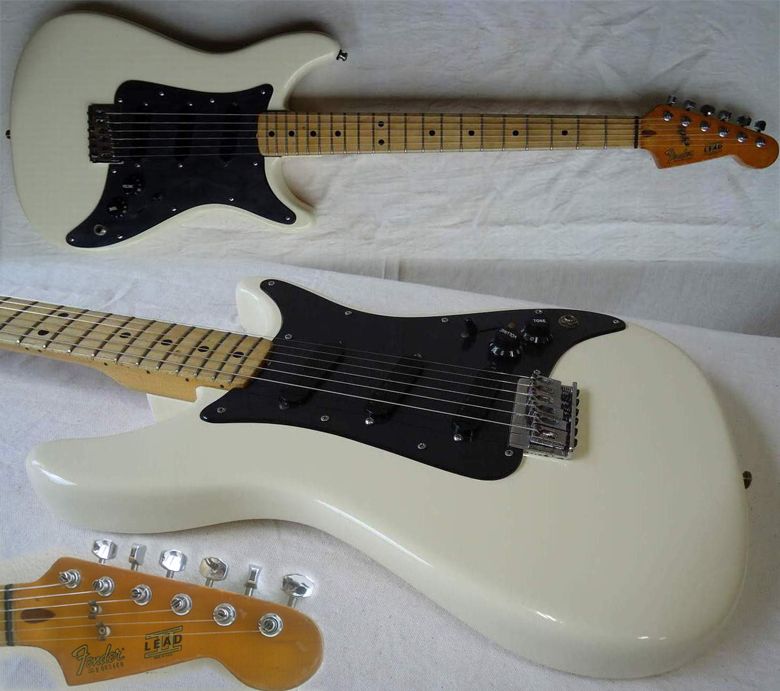
Ivo Campos from Brazil writes:
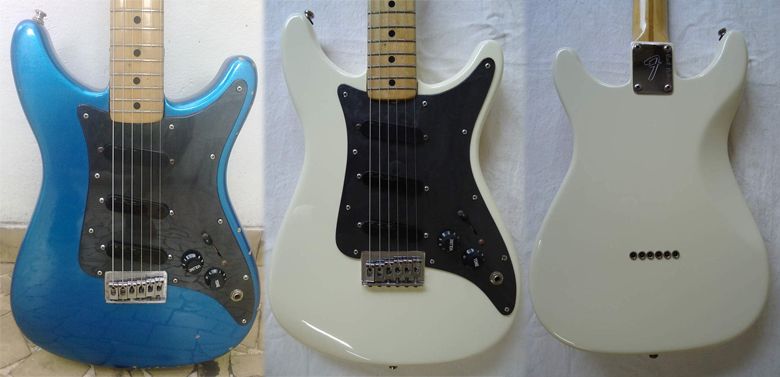
"...thats my 1980 Fender Lead II refinished with Fender Lace Sensor Gold vintage pickups. 'She' was refinished by a friend, a Brazilian luthier called Corellio Rosa, one young genius. Originally was translucent red, but when I bought was metallic blue... terrible. The body is Ash and has a solid maple neck."

Thanks for letting us see your guitar, Ivo. It's good to see some more of these "forgotten" Fenders. The Lead series were produced at Fender's Fullerton, California plant from 1979 through to 1982, and - as Fender's "budget" range instruments - were superseded by the Fender Squier JV series made in Japan, which sadly meant more Strats and more Teles and less "new" designs from Fender.

The Lead series comprised three models. The Lead I had a single humbucker in the bridge position whilst the Lead II had two single coils (Ivo's Lead II as seen here has been upgraded with three pickups). The Lead III model with two humbuckers made a brief appearance in the series' final year of production.

G L Wilson

Guitarz - The Original Guitar Blog - now in its 9th year!
Thursday, December 2, 2010

Paul's homemade 3-string slide guitar

guitarz.blogspot.com:
Paul Hammersley has sent us these photos of a 3-string electric slide guitar, built - very much in the tradition of cigar box guitars - from 1/2" alloy plate, P-bass pickup, and a few bits and pieces found in his garage.

I'd love to know how it sounds.

G L Wilson

Guitarz - The Original Guitar Blog - now in its 9th year!
Tuesday, November 23, 2010

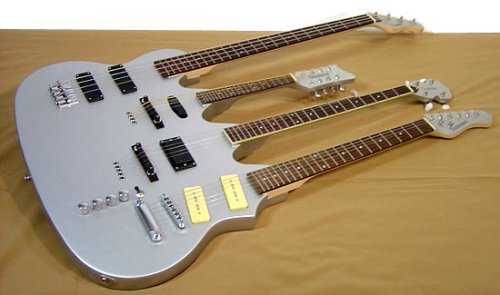
Jim Hevesy's Hembry "Hevy" doubleneck

guitarz.blogspot.com:
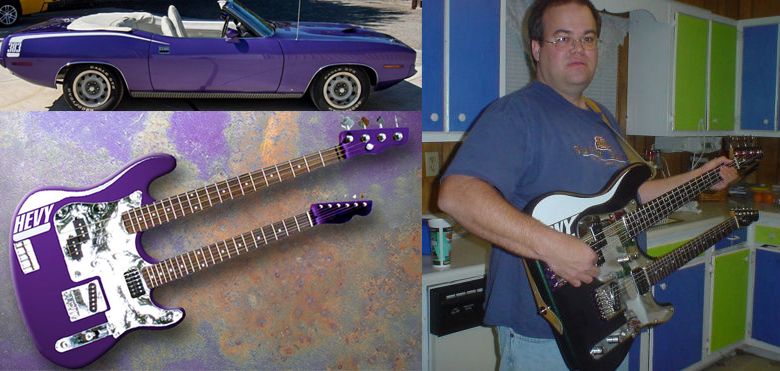
Guitarz reader and guitar enthusiast Jim Hevesy tells us about his Hembry doubleneck:
The double neck was built by Scott Hembry in Washington state. I live in Maryland near Washington DC and I found Scott through another guy on E-bay. I sent Scott what I was looking for and he built it for me. When I would play at church, I never knew what other players I might have so I wanted a 4x6. I was on a Telecaster kick so I wanted to see if he could incorporate a ‘fat’ Tele and a Fender P. I used to have a 1968 Plymouth Barracuda muscle car when I was growing up and I always like the plumb crazy color they had. After talking with Scott we decided on "flip/flop" paint that changes from green to purple depending on the light. He also painted a racing stripe on it for me changing the original "Hemi" to "Hevy" which is what most people call me. I sold a bunch of old stuff I had on e-bay and had this made. It is the fattest Tele I have ever heard (add all that wood and metal and what do you expect?) and plays like a dream. Here are some pics of it. One cool one you will see is the back with a reflection of a giant pine tree from the pacific northwest where it was built.
Thanks for sharing this with us, Jim.

We've previously looked at another Hembry doubleneck, this one a double fretted/fretless Jazz Bass style. For more Hembry guitars see www.hembryguitars.com.

G L Wilson

Guitarz - The Original Guitar Blog - now in its 9th year!
Thursday, August 19, 2010

Ron Marr's doubleneck CBG

guitarz.blogspot.com:
Hi.

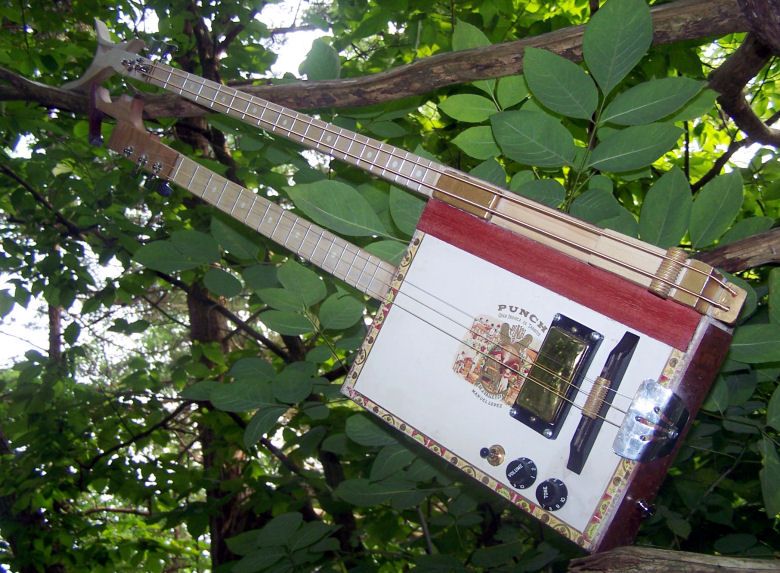
Since an electric cigar box guitar wasn't quite ridiculous enough, I decided I should build myself a double-neck. Thought you might get a kick out of this.

The bottom neck is a 2-string, longneck slide bass (ala Stig Pederson). The custom nut is a hunk of bolt I hacksawed and spray painted. The tailpiece is a chunk of angle iron.

The top neck is a 3-stringer with a low action ... better for me as I do a lot of finger picking (it really is fast ... and for once I even nailed the intonation). Note the fancy-schmancy tailpiece that began its life as a pie spatula.

The homemade necks (steel reinforced ... and rounded with a bastard file) are bolt ons using helicoil inserts and gobs of JB Weld. Oh ... and lets not forget those hand-carved headstocks. Last but not least, in order to take overkill to new heights, I covered the Punch cigar box with a lacewood veneer

I'm thinking my next project may be an electric harp guitar with a 1-gallon oil can for a body.

Great blog ... I check it out most every day.

Ron Marr


Thanks Ron. As ever we are always pleased to receive photos of readers' self-builds. Funnily enough, only last night I was watching a few YouTube clips of The Presidents of the United States of America, a band known for their minimalistic 2- and 3-string guitars (dubbed the basitar and the guitbass respectively). In one clip, Chris Ballew is seen playing a doubleneck basitar/guitbass with a total of 5 strings on it.

G L Wilson

Guitarz - The Original Guitar Blog - now in its 9th year!
Sunday, August 1, 2010

A brief history of the classical guitar

guitarz.blogspot.com:

This is a guest post by Christopher Davis, author of The Classical Guitar Blog

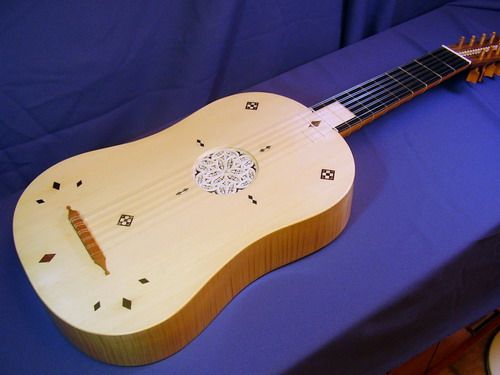
Our instrument has a long history. Dating all the way back to 1400s when an instrument called the Vihuela flourished in Spain. Vihuela featured six courses of strings - a course being a pair of strings tuned to the same pitch in this case. Much like today's guitars, the tuning was fourths and one third. In today's terms, Vihuela tuning would be E A D F# B E.


Interestingly, vihuela was really a family of instruments: they came in all sizes. There are only three original Vihuelas in existence today, and each is slightly different in scale length and pitch. Some would even be considered bass-like. There was also a four course guitar that flourished in France during the Renaissance.

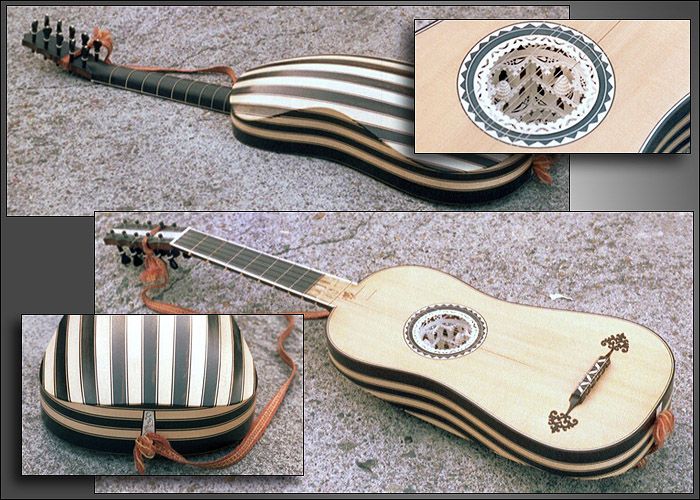
The Baroque guitar (around 1600-1800) flourished in many European countries. These guitars are as much works of art as they are instruments. They featured extensive ornamentation and inlays.


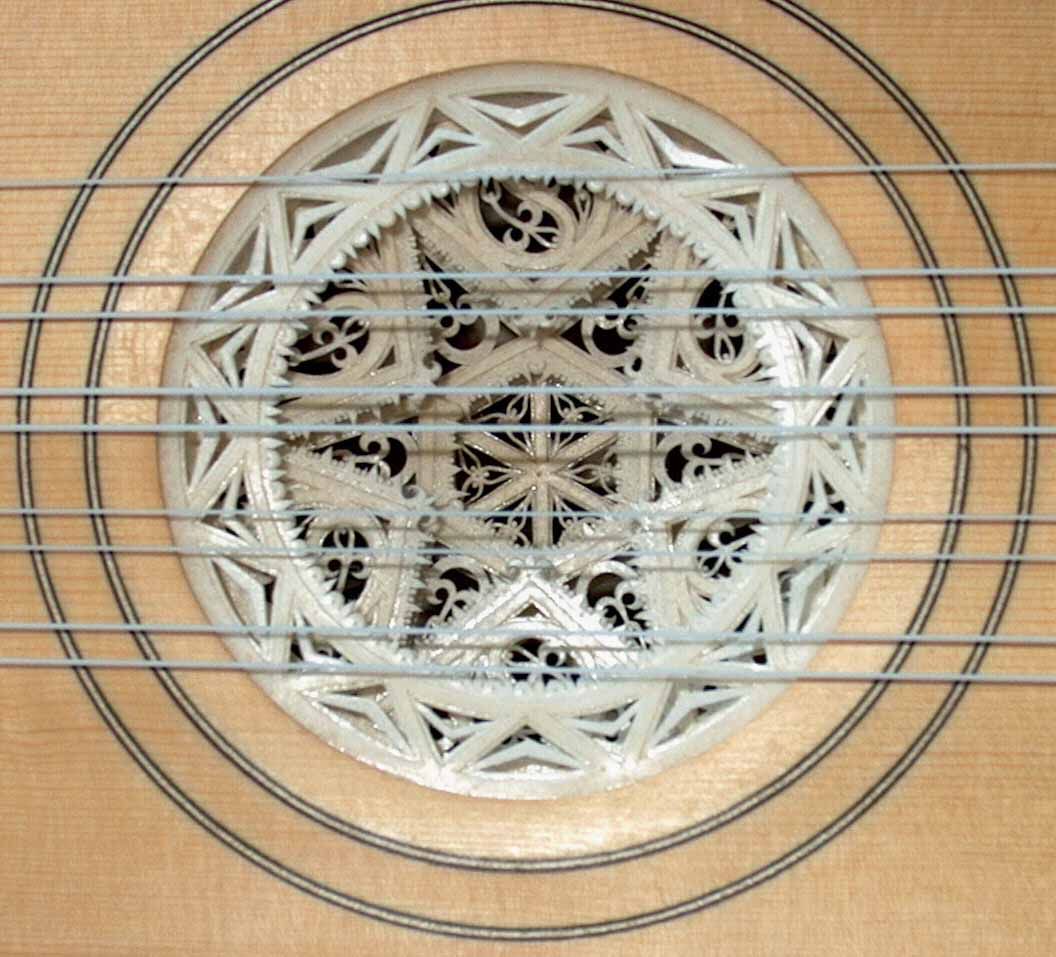
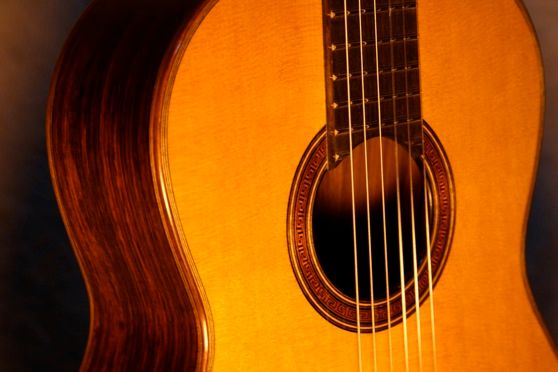
And elaborate rosettes that filled the sound hole.


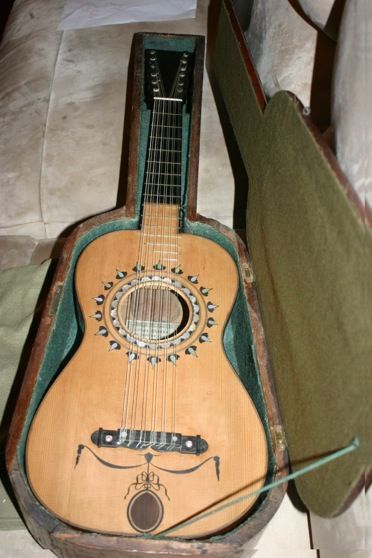
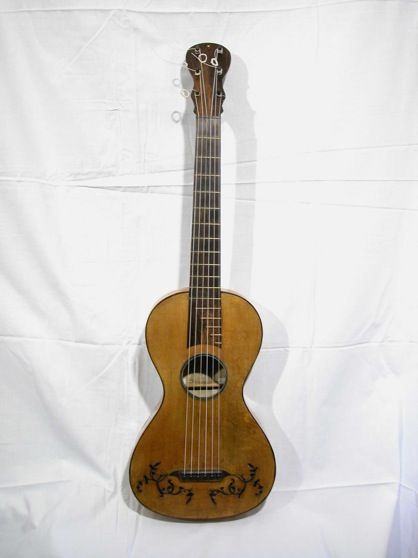
Around 1800 guitar builders gradually added a sixth course, and went to single strings. Check out this instrument, a six course guitar built around 1800.


And this one built just a few years later.


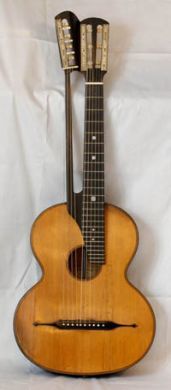
Like guitarists today, guitarists in the later 1800s explored guitars with more than six strings. Composer/Guitarist Johann Kaspar Mertz played on a ten-string instrument similar to the modern harp guitar.


Napoleon Coste also added more strings and wrote music for this seven string guitar.

The ten-string guitar is still alive today thanks to the work of Narciso Yepes.


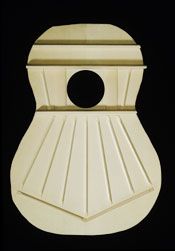
Classical, nylon-strung guitars today, however, are mostly pretty tame. And they're all descendents of the grand-daddy of the modern guitar, Antonio Torres. Torres built guitars in Spain during the late 19th century, and his instruments are the first that we consider modern. The bodies on his instruments were slightly bigger, and the braces on the underside of the top were arranged in a fan.


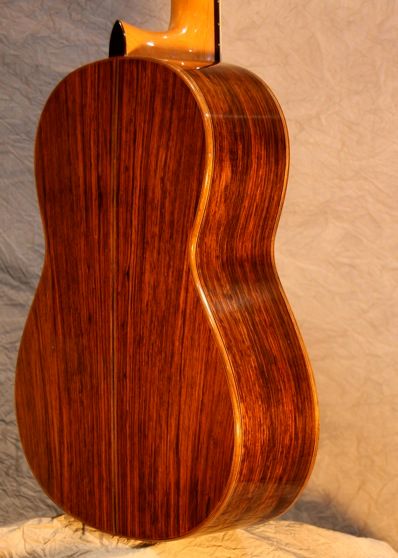
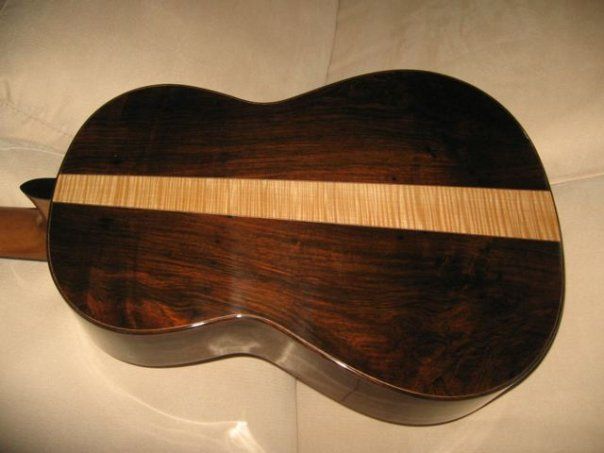
While electric guitars may feature gorgeous wood on the top, the back and sides of a classical guitar are often the most beautiful. Below is my guitar, built in 2009 by Michael Thames.


Most professional level classical guitars - called "concert guitars" - are custom shop jobs. They are built specifically for one person, and you choose a guitar builder based on the features you want. Some builders specialize is construction methods that are a bit unorthodox or strange. Check out the inside of this "lattice braced" guitar.


The tops on these guitars are extremely thin (you could puncture it with your finger), and that black stuff inside is carbon fiber. Another popular construction method today is a "double top". These guitars have a thin top, then a layer of honey-comb style material called Nomex, then another thin top is glued on the other side. Here builder John H. Dick shows off the inside of his guitar tops (towards the end).


There's a lot out there in the world of classical and nylon-strung guitars, and it's well worth exploring.


Christopher Davis

Guitarz - The Original Guitar Blog - now in its 9th year!

Wednesday, July 21, 2010

Mita's hand-built guitar

guitarz.blogspot.com:
We love seeing self-built guitars here on Guitarz, but they can so often be hit and miss. Some seem to design the guitar as they go along and you get very crude looking instruments. Others will rely on templates of tried and trusted designs. It's so refreshing to see an instrument that has been designed from the ground up, that looks fantastic and is all original.

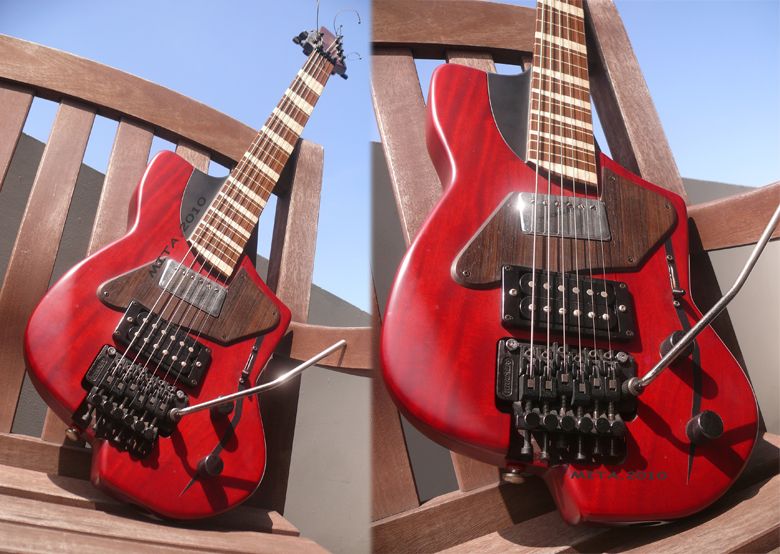
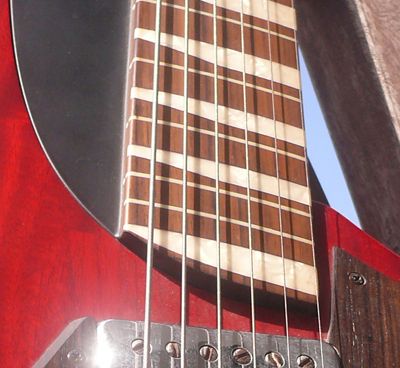
Here we see such an example from Guitarz reader Mita, who made this guitar for a college project as a third year industrial designer student in 2007. The guitar was designed to be compact but with a full scale length, in this case 24.75". The "frets" are in fact inlays (see detail photo, right) making this a fretless guitar.

I think it's a fantastic piece of work. It is both aesthetically pleasing and an original design - something which can be very difficult to achieve.

If I had to criticize at all, I'd say that personally - and I stress that this is just my opinion - I don't see for the need of a tremolo on a fretless instrument (the whole point of a fretless is to use the fingers of the left hand to produce vibrato). But that's a minor niggle, I suppose it's possible that there are fretless players who also wants to divebomb, and this certainly isn't the first time I've seen a fretless guitar with a locking trem.

G L Wilson

Guitarz - The Original Guitar Blog - now in its 9th year!
Monday, July 5, 2010

John McGee's Mockingbird

guitarz.blogspot.com:
We've seen a couple of John McGee's self-built guitars before. Today we see what happened when he turned his attention to one of BC Rich's most iconic designs. I'll let John talk you through it:
Here's a Mockingbird I finished up earlier this year. I'm a fan of the more unusual body shapes, and the Mockingbird has long been one of my favorites.

This one has a mahogany body. I don't know what strain of mahogany it is, but it's dang heavy. In hindsight, I really should have thinned it down a lot more than it is, but oh well. If it bugs me too much down the road I can always just make another body for it. :)

The flat top of the BC Rich version never looked right to me, so I gave all of the edges a soft bevel. Except for the "axe" - it had to stay sharp. You rarely see a guitar painted a really in-your-face yellow, so that was the way to go for this one.

The neck was a bit of an experiment. I glued up purpleheart and lightly flamed maple with the intention of dropping the truss rod in from the back, like on some Fenders. After wrestling with how to fill in the trench in the back, it was suggested to just slice off a piece of the neck blank, use it for the fretboard, and drop the truss rod in the front. As it was from not only the same piece of wood but the same place IN the board, the purpleheart glued back almost seamlessly.

For anyone who might be concerned about the strength of a pinstriped fretboard, you shouldn't be. 99.99% of the time, a properly glued joint will be stronger than the surrounding wood. Fender has been putting a walnut skunk stripe in the back of their necks for decades without issue.

The pickups are a story unto themselves. A friend of mine winds pickups for me in exchange for bodies. He made these with purpleheart bobbins to match the neck. Using wood bobbins isn't too uncommon in the high-end custom shops that wind their own pickups, but they don't come cheap. I'm extremely fortunate to have this friend. These are wound pretty close to PAFs, but a touch brighter.

Chrome hardware and a Kahler finish off the guitar. The electronics are as simple as I get: a 3-way switch, 1 volume, and 1 tone.

John
Thanks for showing us this fine looking guitar, John. I particularly like the multi-lam neck, and the sculpted contours of the body (it's very yellow isn't it?).

G L Wilson

Guitarz - The Original Guitar Blog - now in its 9th year!

Sunday, July 4, 2010

Aria SB-800 bass with 6-bolt neck

guitarz.blogspot.com:
Tyler Beard writes:
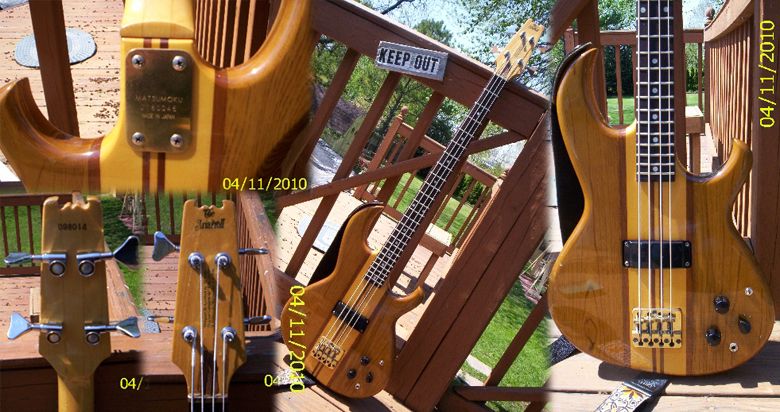
This is a rare variant of the famous Aria SB-1000. From the front it is an SB-1000, but turn it over and you'll see a brass neck plate. Indeed, it is a bolt-on. The neck plate is relatively large because there are 2 hidden screws under it. Why exactly this hidden screw design was chosen, I can't say. Otherwise, this bass is every bit the SB-1000, and equal in its quality and sound. It runs on an 18-volt active circuit. It shares the SB-1000's B.B. Circuit and is a tone monster. Brass bridge, nut, and back plates, aluminun knobs. Has sealed tuners that are very high quality. The body is, in the style of Matsumoku, a neck-through look-alike. It's a laminate of Oak, Maple, and Walnut. Also has the Matsumoku trademark 5-piece maple neck.

The neck also has some features that are atypical of your average. It has almost no taper, so it's consistent and if you feel the need to shred like Cliff Burton (I often do), no problem. Also, the neck is sculpted at the neck joint so that your hand slides onto a smooth curve and not a sudden block where the neck and body join. And the instead of using a scarf joint, the angled headstock is given added strength through leaving excess wood where it goes to the neck. I also feel this bass puts the neck joint=sustain argument to rest. This can easily hold a note long as any set neck or neck through.

Curiously, mine has 2 serial numbers. One on the neck plate, and one on the back of the headsotck. The bass can only date to 1978 (the neck plate agrees), as it was only produced for that year. The headstock says it would be a 1981. I find it unlikely this is a replaced neck, though. It's possible parts were overproduced. The headstock design (the "bat-ear") also dates to the late 70s models as opposed to those in the 80s, and no SB had a neck like this with 6-bolts and the heel so it could not be a transplant off of another model.

~Tyler Beard
Thanks for showing us this bass, Tyler. I couldn't possibly comment as to its rarity value, but it's certainly true that the through-neck style is much better known when it comes to this design of Matsumoku-produced Aria basses. If anyone else has any more information, please leave a comment below, in the usual time-honoured fashion here at Guitarz.

G L Wilson

Guitarz - The Original Guitar Blog - now in its 9th year!